Behind the Bouffant: Dusty Springfield's Secret Soul Influences
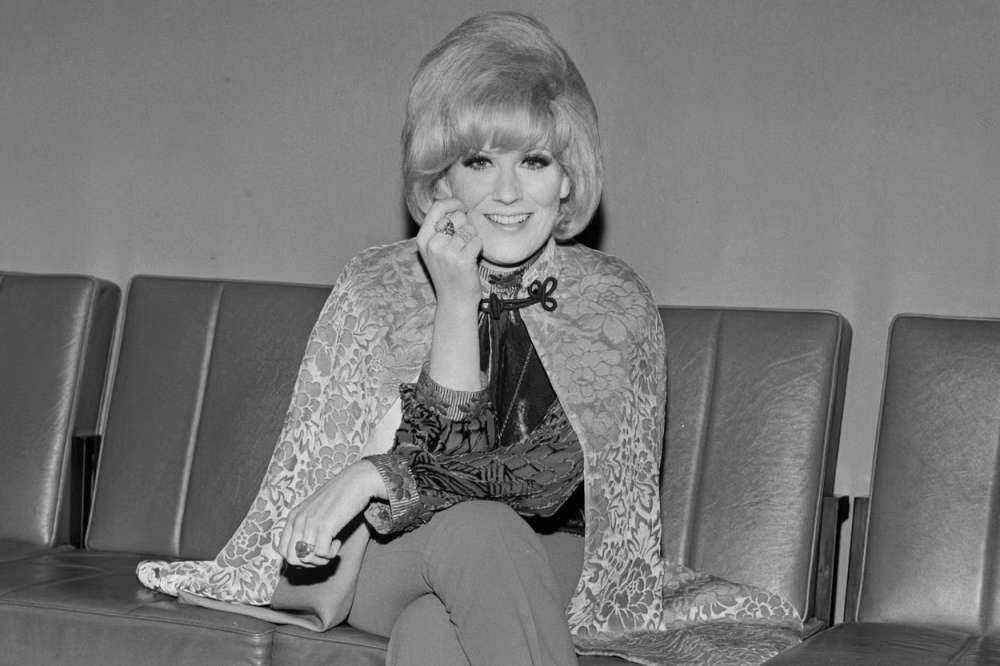
Dusty recorded the song in the R&B capital – Memphis – in the summer of 1968 (Getty)
Ray Scott - Monday, March 2nd, 2026
Dusty Springfield. The name conjures images of a towering blonde bouffant, dramatic eyeliner, and a voice that could melt glaciers. But beyond the glamorous exterior lay a deep passion for, and profound understanding of, American soul music. As we enter Women's History Month, it's the perfect time to explore the surprising R&B artists who shaped Dusty Springfield's iconic sound, delving into her early influences and how she brought soul music to a wider audience. For those of us who grew up listening to her on the radio, this is a chance to rediscover the roots of her magic and appreciate her role as a cultural bridge.
Dusty Springfield, born Mary Isabel Catherine Bernadette O'Brien on April 16, 1939, was more than just a British pop star. She was a conduit, a "Queen of Blue-Eyed Soul" who introduced a generation to the raw emotion and infectious rhythms of R&B. But how did a young woman from West Hampstead, London, become so deeply connected to a musical genre born in the African American experience?
The Irish-Scottish Melancholy and Musical Foundations
The answer lies in her upbringing. Dusty's childhood was a mix of musical immersion and emotional turbulence. Her father, Gerard O'Brien, a frustrated concert pianist of Scottish and Irish descent, exposed her to a wide range of music, from Gershwin to Ellington. He would tap rhythms on her hand, challenging her to identify the compositions, fostering a deep musical literacy.
Dusty herself attributed the “sadness” and “melancholy” in her voice to her Irish-Scottish heritage. This inherent wistfulness, she believed, permeated her approach to every genre. This wasn’t just imitation; it was a genuine emotional connection that resonated with the soul of the music. As Elton John, a friend and admirer, stated, "I'm biased but I just think she was the greatest white singer there has ever been," based on her unprecedented emotional authenticity.
Even at age twelve, Dusty's musical inclinations were evident. A recording of her singing Irving Berlin's "When the Midnight Choo-Choo Leaves for Alabama" showcased her early gravitation towards American songs with African American musical influences. Her biographer, Lucy O'Brien, described Dusty's childhood as "characterized both by displacement and by hope," noting her aspiration to find belonging through singing. Soul music became that spiritual home, a place where she felt she could truly belong.
The Transformative Moment: The Exciters' "Tell Him"
The turning point came in 1962 when The Springfields, Dusty's folk-pop group, traveled to Nashville to record. Dusty, increasingly frustrated with the limitations of folk and country, felt restricted. Shelby Singleton, the Sun Records owner, observed that she was "becoming more 'Black' with her voice".
Then, in Manhattan, she heard The Exciters' "Tell Him". It was a revelation. The song's raw emotion, rhythmic vitality, and vocal expressiveness ignited something within her. It was the synthesis she had been searching for. Within a year, she embarked on a solo career, a decision that would reshape popular music.
The Souls She Studied: A Self-Directed Musical Education
Dusty's engagement with soul music was far from superficial. She embarked on a rigorous apprenticeship, studying the recordings of Aretha Franklin, Martha Reeves, and other Motown artists. She frequented the vibrant club scene of 1960s Britain, immersing herself in the music.
In 1965, she confessed, "I have a real bond with the music of the colored artists in the States. I feel more at ease with them than I do with many white people". While the language reflects the era, it underscores her deep connection to Black American musical traditions. She didn't just listen; she studied. She cultivated relationships with Black artists like Madeleine Bell, collaborating to understand vocal techniques and emotional expression.
Dusty's commitment extended beyond personal study. In April 1965, she hosted a Motown special on "Ready Steady Go!", featuring The Supremes, Smokey Robinson and the Miracles, and Stevie Wonder. This was a deliberate act of cultural intervention, using her platform to introduce these groundbreaking artists to a wider British audience.
Vocal Technique and Stylistic Innovation
Dusty didn't simply mimic her idols. She developed her own interpretive synthesis, absorbing the emotional intentions and phrasing conventions of soul music and reimagining them through her unique vocal instrument. Vicki Wickham and Barry Mason, the songwriters of "You Don't Have to Say You Love Me," noted that Dusty transformed the song's emotional meaning through her interpretation.
Her voice, a mezzo-soprano with a breathy, vulnerable quality, was instantly recognizable. Jerry Wexler, the legendary Atlantic Records executive, praised her "haunting sexual vulnerability" and "impeccable intonation". She perfected her sound through relentless practice, demanding high volumes in her headphones to catch even the smallest deviations from her intended interpretation.
One distinctive technique was the "croak," a guttural sound at the start of phrases, adding intensity and emotional conviction. Her wide vibrato, applied selectively, enhanced the emotional impact without overwhelming the melody.
Dusty in Memphis: Artistic Triumph and Cultural Complexities
Her 1969 album, "Dusty in Memphis," is considered her masterpiece. Recorded with legendary session musicians, including those who worked with Aretha Franklin, it featured "Son of a Preacher Man," a song originally intended for Franklin.
"Son of a Preacher Man," penned by white Southern men, intended for a Black soul superstar, and ultimately made famous by a white Englishwoman, embodies the fluidity of Sixties soul. However, the recording process also revealed Dusty's anxieties. Overwhelmed by recording in the same studios as her idols, she struggled to complete her vocals in Memphis, eventually finishing them in New York.
This highlights a fundamental paradox: her genuine love for soul music versus her awareness of being an outsider. After hearing Aretha Franklin's version of "Son of a Preacher Man," Dusty reportedly felt that Franklin had "done it better".
The Enduring Significance
Dusty Springfield's legacy is complex, raising questions about race, authenticity, and cultural interpretation. She demonstrated that genuine respect and advocacy, combined with serious study, can produce artistically valuable work. Her story reminds us that the most important thing is to acknowledge one's debt to those whose tradition one is interpreting, and the commitment to using one's platform to advance the recognition and success of artists from the marginalized communities whose traditions one has learned from and benefited from.
As we reflect on her career this March, we can appreciate Dusty Springfield's unique contribution to music history. Her story is a reminder that music transcends boundaries and that genuine passion and respect can bridge cultural divides. Why not revisit "Dusty in Memphis" this week? You might hear it with new ears, appreciating the soul that lay behind the bouffant.

POWERED BY:
Schedule
-
 Judith Gross
2:00pm - 7:00pm
-
 Binghamton's Oldies
7:00pm - 6:00am
-
 Mo Taylor
6:00am - 10:00am


Supporting Local Businesses

- Reach More Potential Customers across multiple channels
- Hands-on local Marketing Consultant
- Locally Owned and Operated

Upcoming Events
-
 Binghamton HS presents "Something Rotten"
Set in the Renaissance, the show follows two struggling playwright brothers, Nick and Nigel Bottom, as they attempt to outshine the era’s biggest celebrity—Will...
at Helen Foley Theater -
Fish Fry Fridays
Every Friday Fish Frys from 2/20/2026-4/3/2026
at Joseph P.mangan American Legion Post 1194 -
Trivia Night Fundraiser for Vestal Class of 2026
Trivia Night fundraiser for Vestal class of 2026 After Prom Party.
at Vestal Elks

